VIR ahead of Round 3. Muted by default. Click to hear it.
Outlap No. 001 — Filed before Round 3
Nowhere to hide: VIR.
Twelve hours at the most brutal lap of the Zenith season so far. The tire variable nobody has had to manage yet. Heaven on Earth. What Round 3 actually asks.
June 2, 2026
The legendary Carroll Shelby once said that “One lap around VIR is like a hundred at Watkins Glen”, and another who raced under the name P. L. Newman called it “Heaven on Earth.” It’s the duality of one of the longest and the fastest courses on the Zenith Race Series endurance racing calendar, and it’s the first 12 hour race of the season. Entering the third round of the season, we find out whether the standings have been honest.
The stakes
The track itself: Seventeen turns. 3.27 miles. Elevation changes that hide what is around the next corner from the windshield. Three heavy braking zones the NP-01 EVO enters at over 130 mph, the highest-speed braking zones the calendar has thrown at the field this year. The Oak Tree complex, the run through Turns 8, 9, and 10, is a sequence where a half-foot too wide on entry costs the entire run through one of the longest straights in North America. Turn 5 and 5a are technical in a way that does not look technical from the grandstand; they reward setup work that nobody outside the engineer’s notes will ever see. And then there is South Bend.
South Bend is the corner that ends seasons, taken at over 110mph. A driver who puts a wheel an inch off the track at the exit will have the car jump, take a bodywork hit on the curb, and spend the rest of the lap discovering whether the suspension or the floor got the worst of it, assuming the car makes it that far.
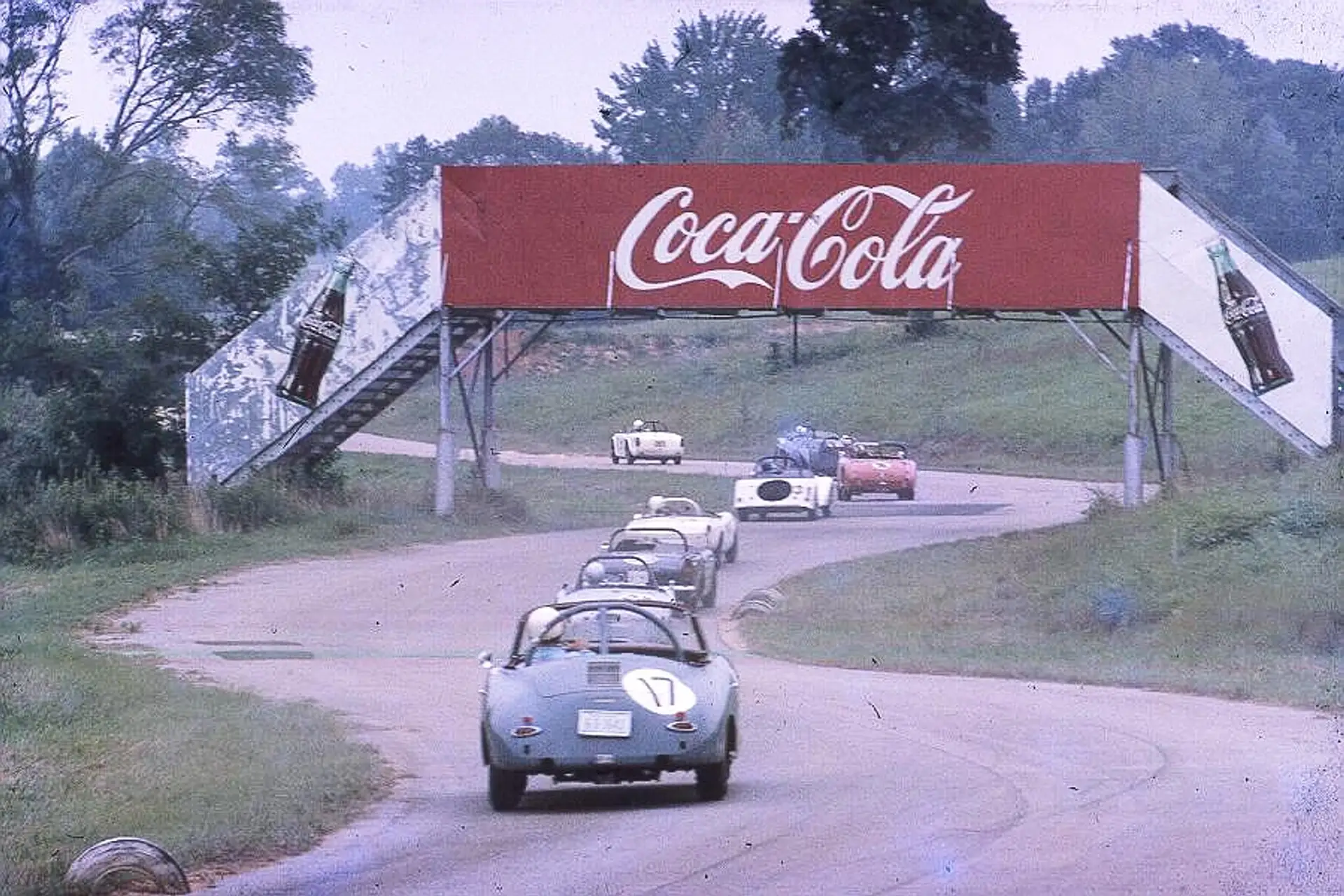
VIR has been carrying serious racing since 1957.
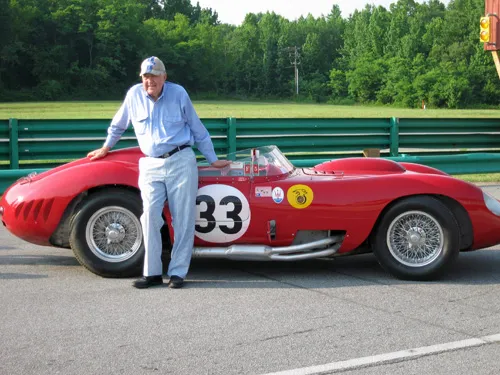
Carroll Shelby at VIR, 2007.
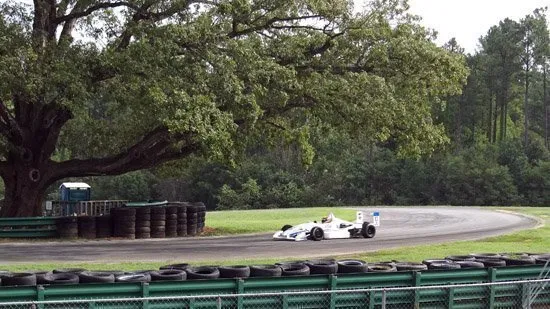
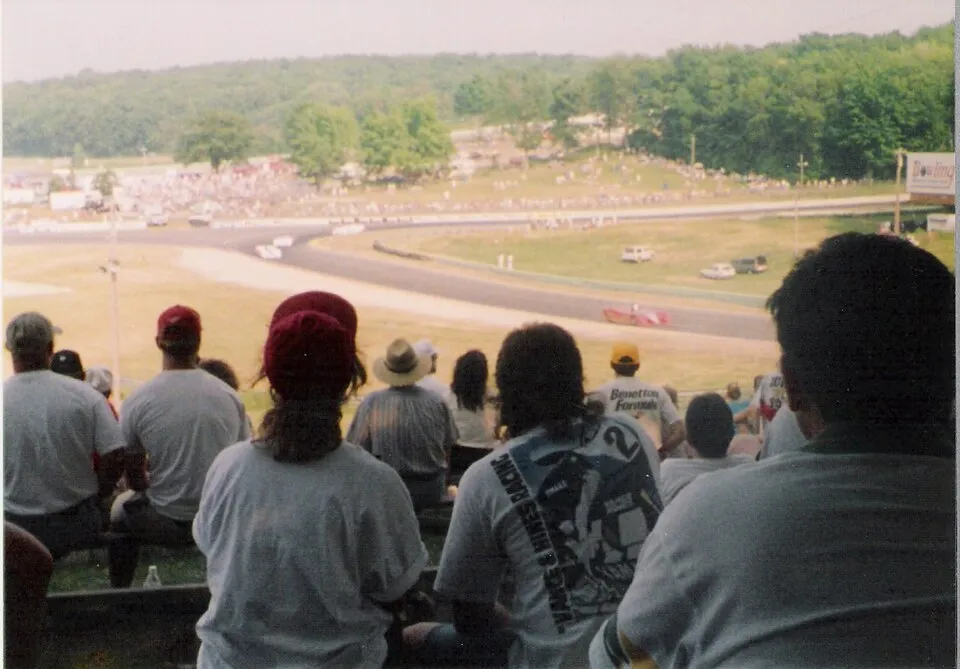
Open-wheel racing around Oak Tree, back when there was still a real tree there.
Twelve hours, two races
The format at VIR is twelve hours, the longest race of the year so far. Technically split into two races, one points scoring mark at exactly 6 hours in, and one at the end of all 12. The format is extra punishing, as there’s no time in-between to learn what went wrong or to fix damage. At Sonoma, the field ran two races over two days. At Barber the same. Drivers and teams who lost ground on Saturday could make some of it back on Sunday. At VIR, the race has no second take. Twelve hours of time to protect and twelve hours of time to lose.
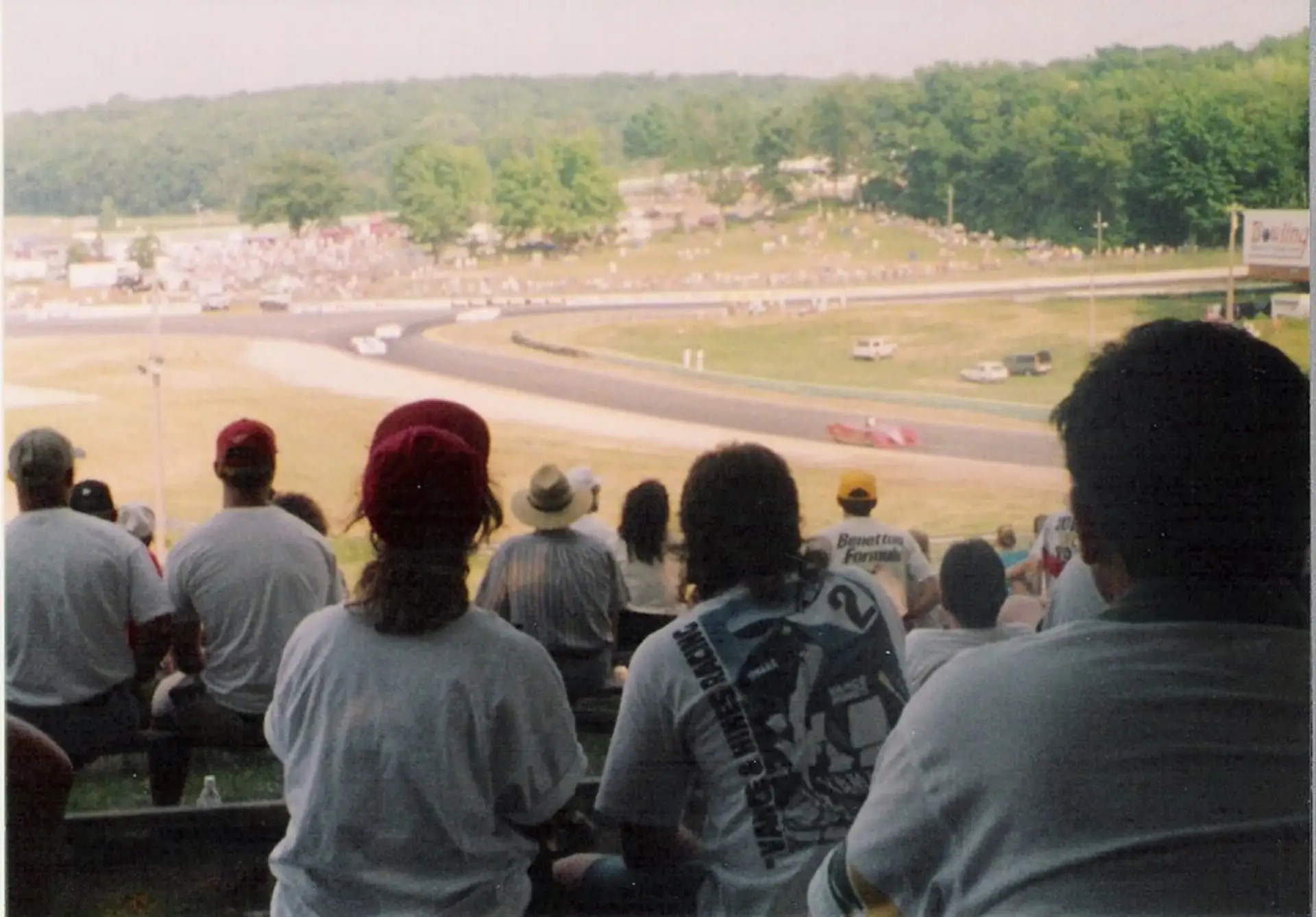
The grandstand banks are out there for the whole twelve hours too. They always have been.
The tire variable
There is also a strategic variable at VIR that has not existed yet this season.
None of the four races of the Zenith season so far have required a team to manage tire degradation as a strategic decision. The races were short enough that most teams got by with zero tire changes and the math was about fuel, not rubber. Twelve hours on VIR’s tarmac, in June, will not work that way. Tire wear becomes a planning variable. Teams that get lucky with an incident timing to change tires will benefit significantly over teams who have to change tires during green flag running.
The variable that hasn't mattered yet. Twelve hours gets decided here, in the rubber, as much as anywhere.
That is one of the things VIR provides, amongst a sense of beauty and risk. It puts the tactical question into the season that the grid has not yet been required to answer. Whatever team nails their tire strategy, will be the team that runs up front.
The Virginia heat
Mid-June in Virginia is a specific physical reality.
Track temperature reaches the mid-90s by late morning. Cockpit temperatures are higher. Driver hydration becomes the variable that hasn’t impacted the results yet. At VIR, it decides which late-stint laps a driver actually has in them. Teams utilizing only two drivers will be fighting to keep their lap times stable towards the end. Early mistakes can compound too with the heat.
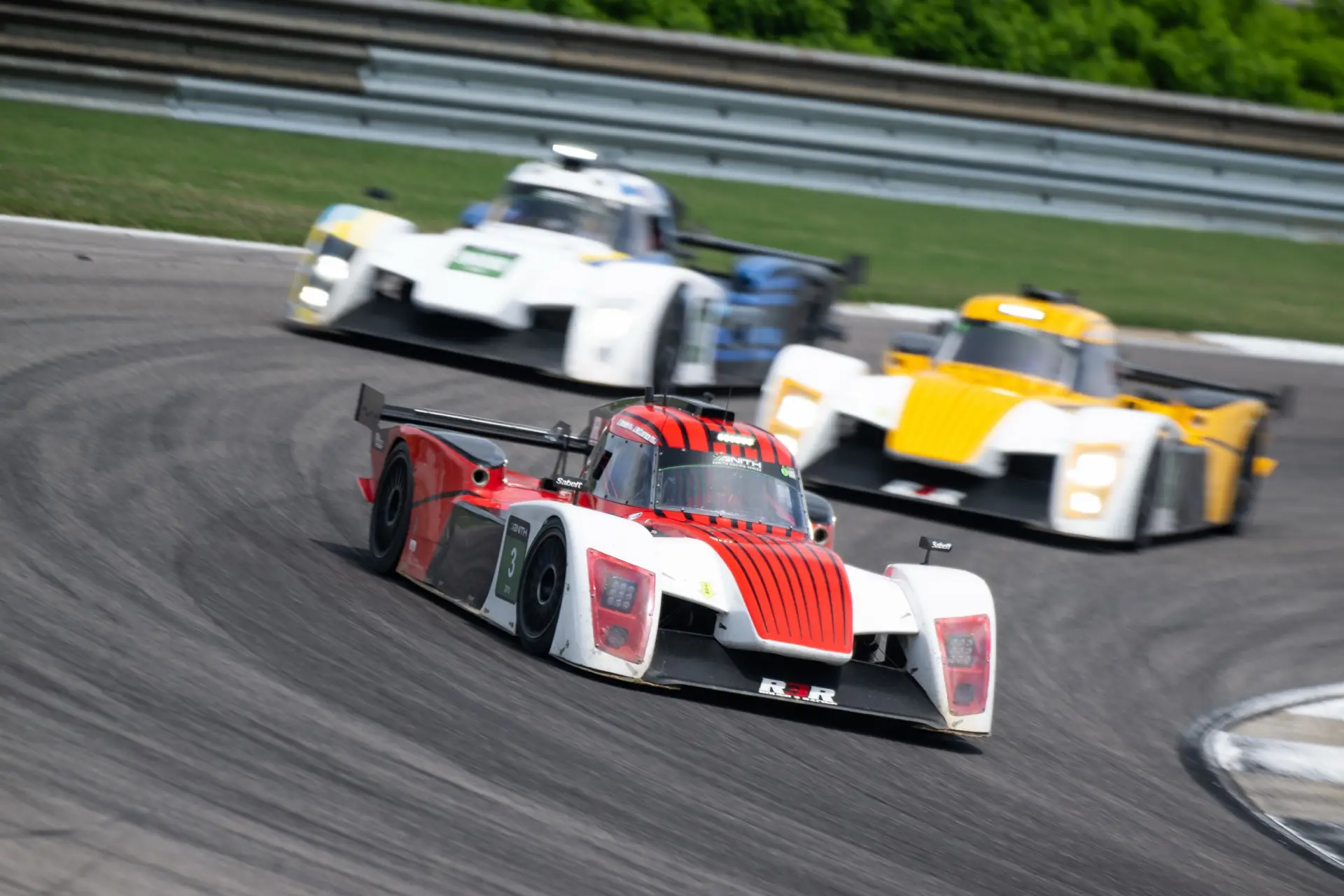
The red #3 out front, the field behind it. Twelve hours together, before it comes apart.
The championship picture
Round 3 Racing walks into VIR sitting with all three cars in the top three positions of the drivers championship. The red #3’s Jon McClintockDebrief No. 001“Still on track at the end.”Read the piece → at P1. He’s the only driver of the red #3 to have entered all rounds so far. The yellow #4 is tied at P2 with the drivers of the Nimbus #77. The blue #5’s drivers at P3. On the car entry championship, Stratus Racing holds the top spot well clear with three wins in four races. Though not eligible for the drivers championship, their pace decides what’s possible for everyone else.
Nowhere to hide
There is nowhere to hide at this round. Not from the punishing nature of the track, not from the brutal heat and humidity of Virginia in June, not from the duration of the longest race Zenith has yet. And there’s nowhere to hide behind the car. ZP2 is a mostly spec class. Every entry runs roughly the same Sebeco NP-01 EVO, the same Mazda MZR four-cylinder, and the same minimum weight, with the exception of some Stratus Racing exhibition entries with turbos. No Balance of Performance quietly handing pace to one car and taking it from another. When the equipment is identical, the stopwatch is measuring exactly one thing: the driver.
What the equal cars keep exposing is how deep the field runs. The ZP2 entry list carries a recent IndyCar Rookie of the Year, drivers with overall sports-car titles and Rolex 24 podiums behind them, Formula 3 and Road-To-IndyCar graduates, professional driving coaches, professional sim-racers, and club racing standouts, all lining up in nearly identical machinery. Some of that is a launch-year effect: a new series with a seven-figure awards purse pulls this kind of talent.
Whether it stays this stacked as it matures is an open question, but for these twelve hours around Virginia, none of it matters. There is no car to credit and no car to blame. Only who was quicker, for longer, with the least left in the tires.
The question is not whether VIR will expose something. The question is who it exposes first.
End
Driver debriefs, race dispatches, the story told from inside the helmet, by email.