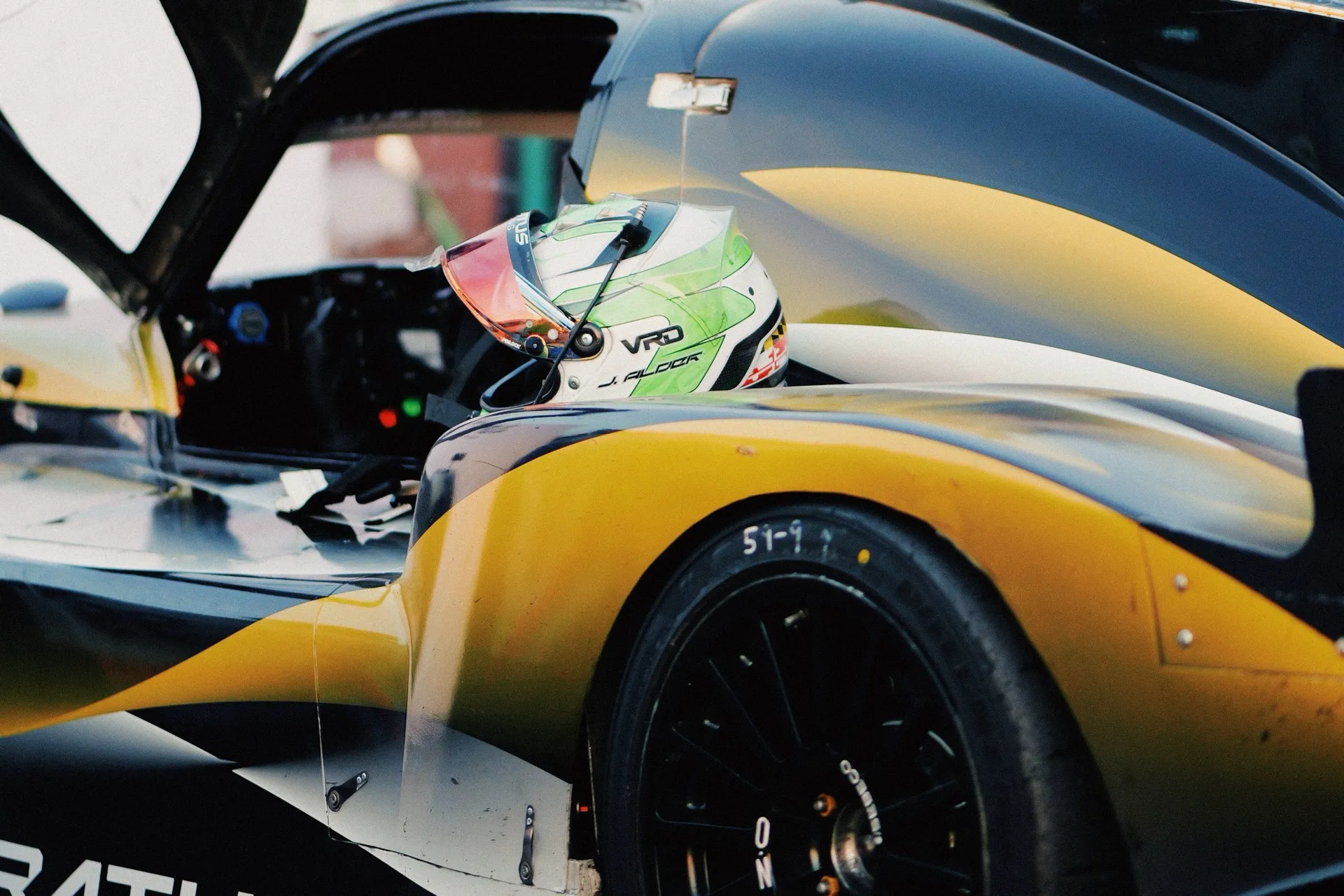
How are you this fast already?
A year ago he was racing Spec Miatas on club weekends; now, at eighteen, he is tied for the lead of the top class of a pro-am endurance championship. Gavin Vaughan on the jump to a prototype, the calm he finds in a sim, and the 150 songs he's written between rounds.
Gavin Vaughan has been racing cars for a little over a year. He is eighteen, from Cypress, Texas, and his first full season in anything was a Spec MX-5, run alongside Spec Miata in local NASA and SCCA events around Texas. That’s the whole résumé: twelve months of momentum cars on club weekends.
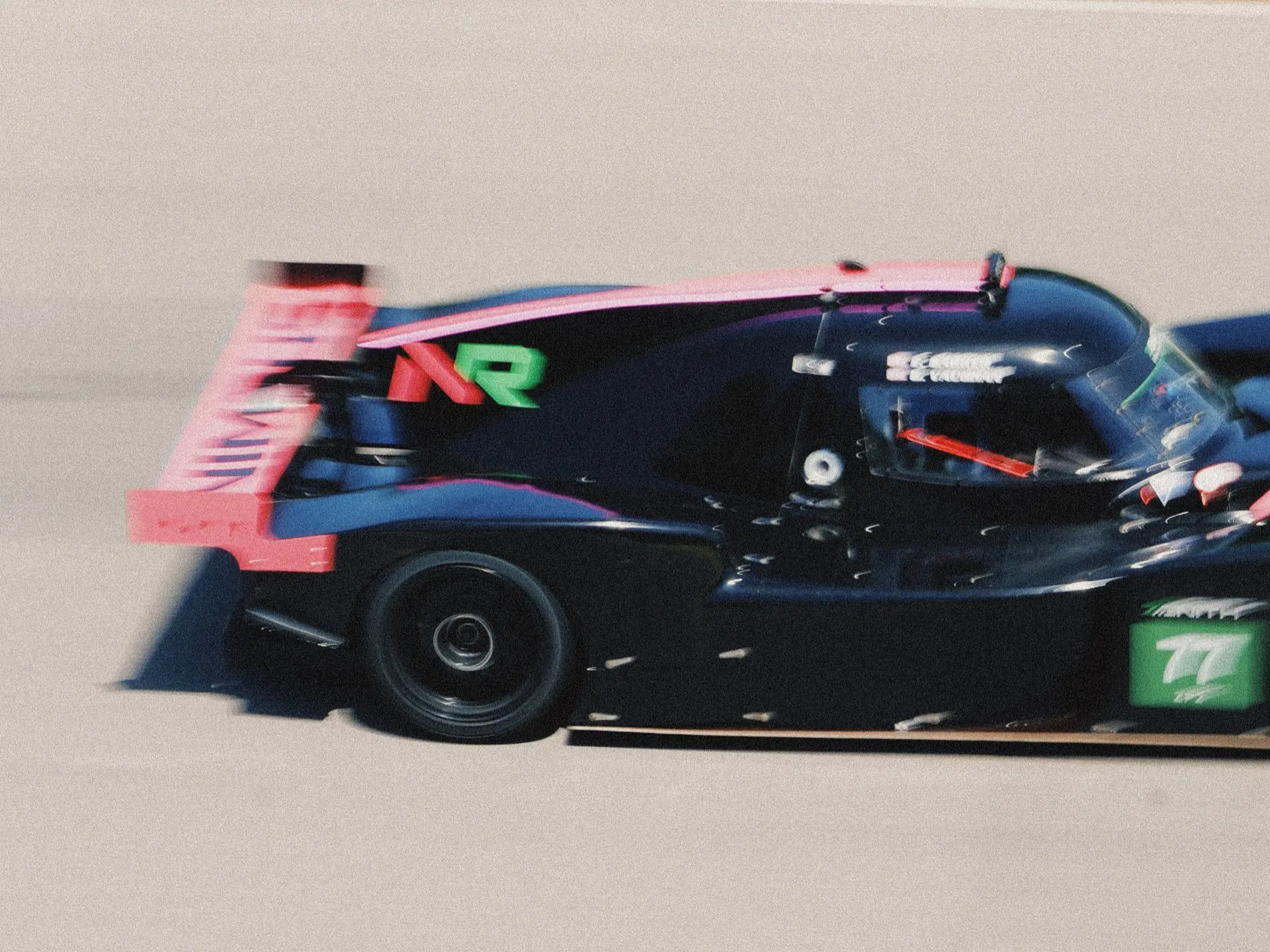
Three rounds into the Zenith Racing Series, he is tied for the lead of the ZP2 drivers’ championship, the fastest class in the series, against a field of Road-to-Indy graduates and a former IndyCar Rookie of the Year. He shares the Nimbus #77 NP01 with Ethan Barker, and at VIR the two of them ran the full twelve hours on two drivers where most of the field used three.
He still runs the sim for hours a week. “It’s peaceful to me,” he says. How a one-year Spec Miata driver got here this fast is the question worth asking, so we finally managed to catch up to him and ask.
The Debrief
The basics: where you’re from, what you race, the cars.
I’m Gavin Vaughan, and I’m from Cypress, Texas. I started racing in May of last year in Spec Miata, doing local NASA and SCCA events throughout the 2025 season, then moved into Spec MX-5 alongside Spec Miata for the beginning of 2026.
How’d you end up in an NP01? What was the first car, the first series, the moment you knew this was it?
Racing has been an obsession for me for a few years now. I was, and still am, on the sim for hours a week. It’s peaceful to me. When I moved into real cars, it brought that same familiar peaceful feeling that sim racing gave me.
The first of those was the Miata, a perfect car for what my goals were. Racing in the Spec Miata series develops drivers very quickly because of how the car punishes mistakes. If you make one, you can’t accelerate back up to speed quickly. I knew, and still believe, that the Spec Miata was the car for me, the car that I loved to drive, but also the one to develop me as fast as I could as a driver.
Then I got a call from Ethan Barker, a good friend of mine. This was back in February, when I was a lot less experienced. He told me he was running in this new endurance series, in the fastest class, the ZP2 class at the Zenith Racing Series. He sent me photos and told me about the car he’d be driving, the Sebeco NP01 with Nimbus Racing. Then he told me his teammate, the one he would have been driving alongside, unfortunately couldn’t make it for the whole season, and asked if I’d want to join as one of the drivers for Nimbus for the 2026 season. I definitely couldn’t pass the opportunity up. I called my dad to talk it over, and called Dakota Dickerson to get the details on the series.
What was the transition like from a Spec MX-5 to a prototype? How big a jump is it really, and what surprised you most about the NP01?
My first race was at Sonoma, and I was nervous for sure. I had only driven the Spec MX-5 and the Spec Miata before that. The car is quite intimidating, small and nimble with a lot of downforce and speed. But I was optimistic, because I’d done a lot of sim prep before I arrived.
When I first drove it, I was shocked at how “on rails” the car felt. It was incredible how much grip it had in the corners, very pointy, very sharp, and incredibly fun to drive. The jump from a Spec MX-5 and a Spec Miata was big. Those are quite slow, with a lot of body roll and no aerodynamics, a vastly different kind of car. But I was definitely up for the challenge.
A year ago you weren’t racing cars at all. Three rounds in, you’re tied for the drivers championship lead. How has it come together this fast?
I’ve surprised myself, if I’m honest. The guys we’re racing against and alongside at Zenith are some of the best it gets: Round 3 Racing, IndyCar drivers, LMP3 drivers. I’m just incredibly stoked about not only being on track with them, but being competitive against them.
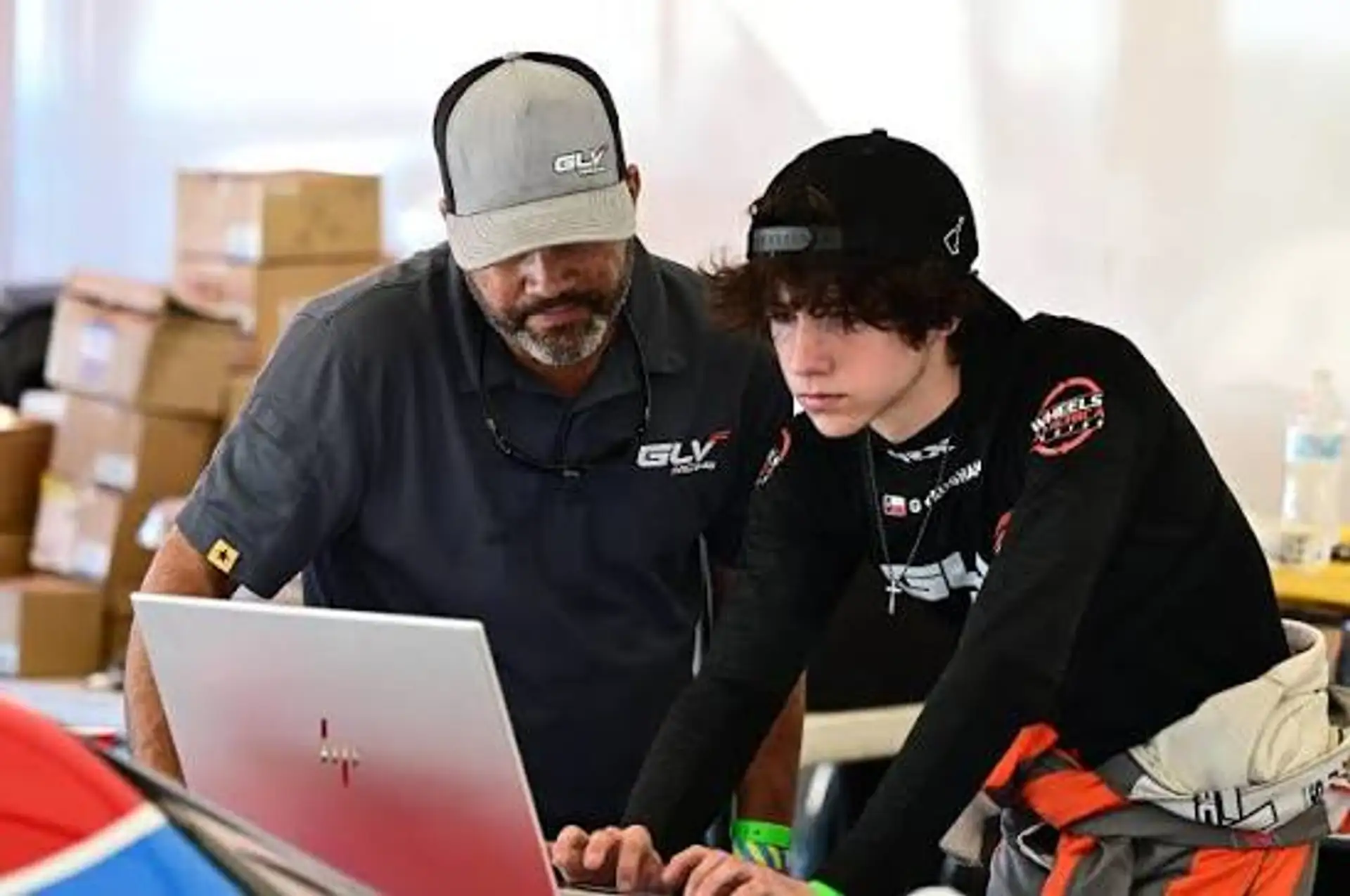
I give all the credit to Ethan Barker, my dad, and the incredible team Nimbus Racing has put together for us. Ben Waddell, Jason Alder, and Ethan are just a few of the names who’ve shared their years of expertise with me to help me get competitive as quickly as I could. I couldn’t thank the whole team and pit crew enough for the hard work, and the kindness.
Time goes weird in a long stint. What do those hours in the seat actually feel like: faster, slower, gone?
I’ve heard drivers say time goes incredibly slowly in the car, and others say it feels like it goes incredibly fast. I’ve always had trouble explaining what it actually feels like, because it doesn’t feel unusually fast or unusually slow to me. It almost just feels gone. You have to be so focused on what you’re doing in the moment that you dissociate a bit. I almost forget time is passing until my second or third stint, when I start to get a bit tired. Time starts to move a little slowly once you get tired lol.
Every driver has a pass they replay in their head. What’s the one you keep coming back to?
The pass I’m most proud of actually happened at Barber, at Zenith. Early in the race I was battling with another NP01. He covered the inside of Turn 5, so I shot to the outside and dove in super deep, and passed him around the outside. Something about it was just super satisfying.
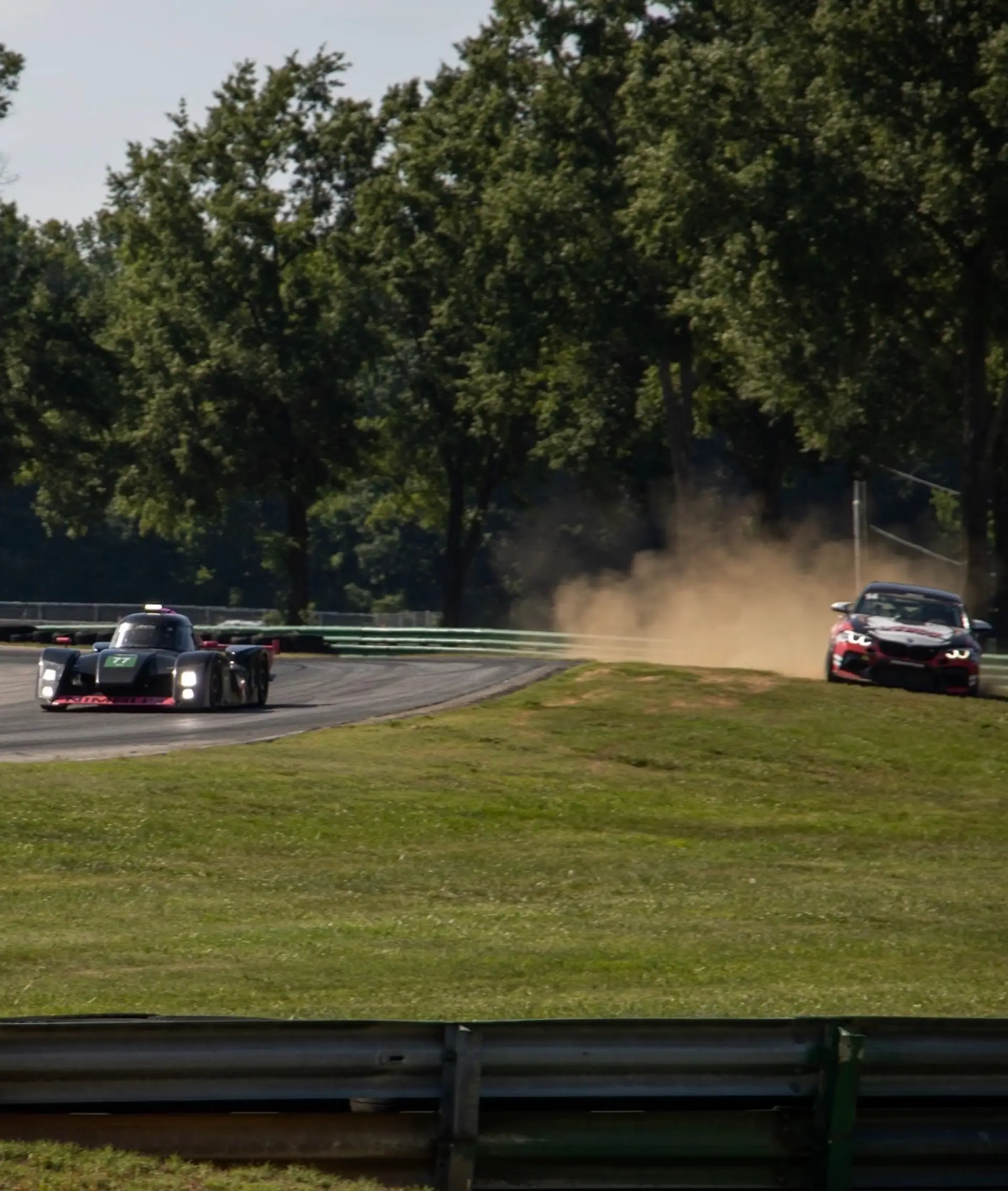
VIR was your first twelve-hour, right? What did race day actually look like, and what did going the distance teach you that a Spec Miata sprint never could?
VIR was an insane race. Twelve hours is an incredibly long time to be at full push in a race car, and it’s a lot of stress on the car, the drivers, and the team, especially at a place like VIR. For three cars to finish within twenty or thirty seconds of each other is absolutely insane, and it just shows how competitive the ZP2 field at Zenith is.
Me and Ethan Barker were the only team to take on the full twelve-hour race with just two drivers. Each of our stints was around three hours, such a long time in the car, but it really proved to us that we can win this thing with only two drivers in a field of teams running three.
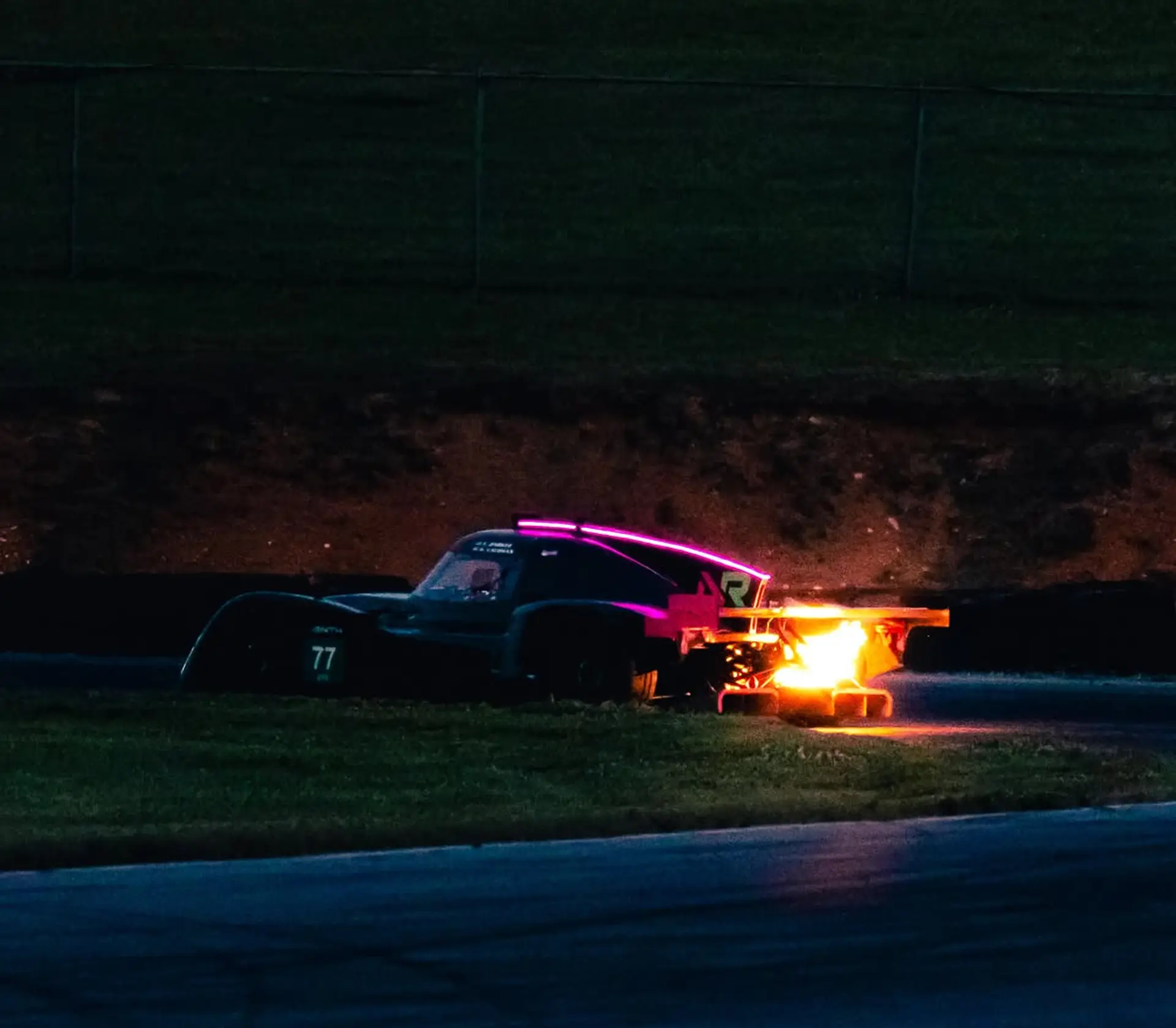
Endurance is one of the only kinds of racing that asks you to share your car. What’s that been like this season?
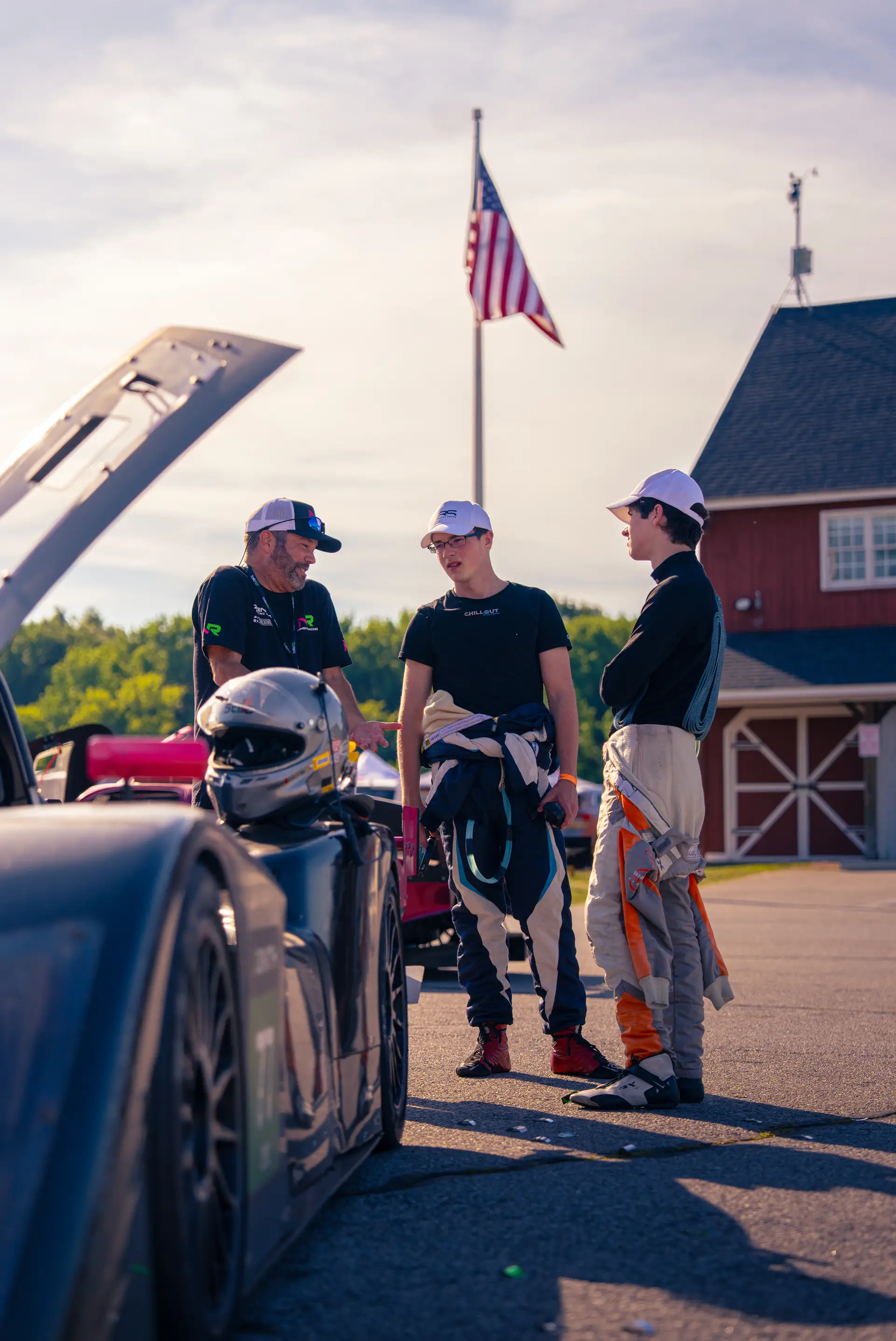
Sharing the car with another driver is a weird dynamic. Having to swap seats mid-race so you can each be comfortable takes some getting used to. I never worry about something happening to the car, though. When I’m not in it, I know it’s in great hands with Ethan. He’s been incredibly consistent, running right at the top every time he’s in the car.
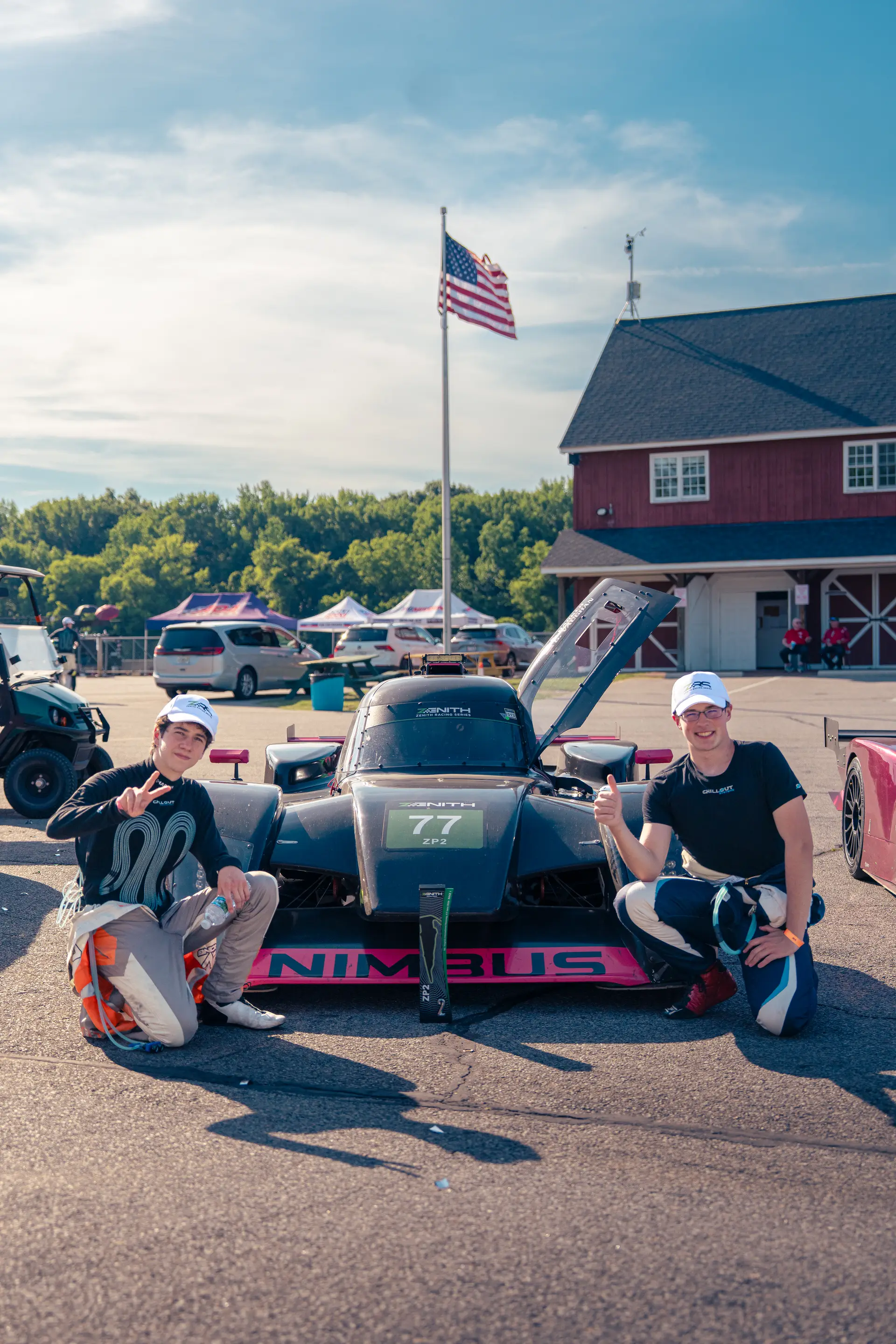
What does the rest of your life look like around all this, when you’re not at a track?
The rest of my life, when I’m not at the track, is quite simple, to be honest. When I’m home I focus on school as much as I can, while balancing hobbies. I sim race quite often, but one of my other huge passions is making music. I love to sing, and I have over 150 completed songs across all sorts of indie genres. Sometimes I’ll make three or four in a day. Those three things take up most of my time, apart from seeing family and friends whenever I get the chance.
One year in and already here. Where do you want to go from here?
As much as I’ve loved Zenith and Miata racing, my goals stretch past where I am right now. I hope one day to be a professional driver, in any series, with any manufacturer. Anywhere I can be in a seat and make a living off of being in motorsport would mark my goals accomplished.
I also dream of one day creating or supporting a foundation that invests in mental health. Racing did a lot for me, and for a lot of other people’s mental health, and I believe it can do far more than just that.
What’s the one moment from this season so far you know you’ll keep?
The one moment from this season I know will stick with me for life was the in-lap of the 7 Hours of Sonoma. I vividly remember being on a cool-down lap, coming around to the chicane. It was foggy over the mountains, and the sun had just dropped behind the building directly in front of me. That sight really put me in the moment. I remember thinking, “Wow, I’m really here, this is so cool.” That was the most in the moment I’ve ever felt in my life.
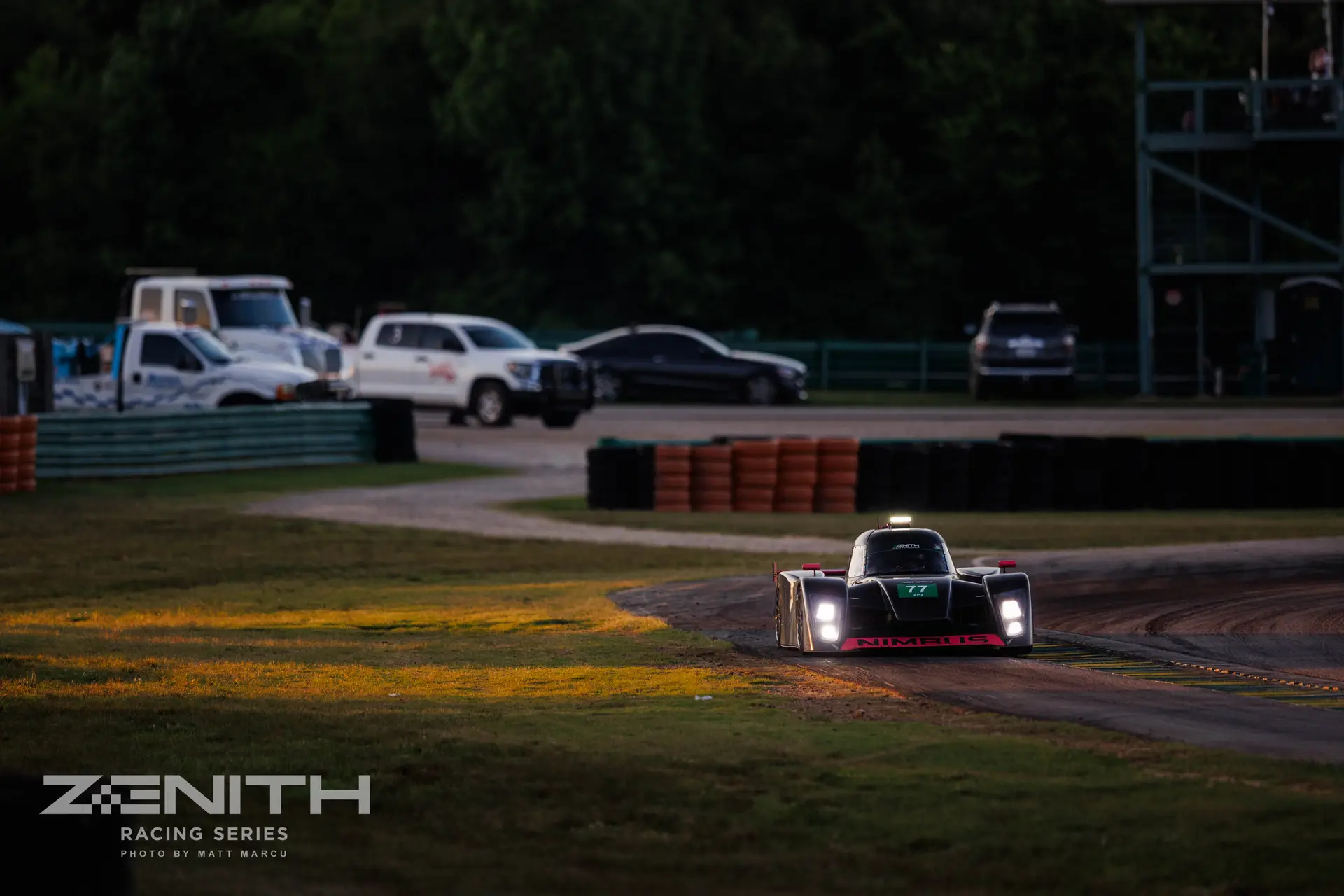
The thing Vaughan keeps describing isn’t speed. It’s calm. The sim was peaceful to him; the cockpit, he says, brought the same feeling. Time in the seat doesn’t race or drag, it just goes. The lap he says he’ll keep for life wasn’t a pass or a fastest time but a cool-down at Sonoma, the fog coming in and the sun dropping behind a building, the most present he had ever felt. Most eighteen-year-olds climbing this fast get called hungry. Vaughan sounds more like someone who went looking for somewhere quiet, found it in the loudest, fastest place there is, and turned out to be one of the quickest people in it.