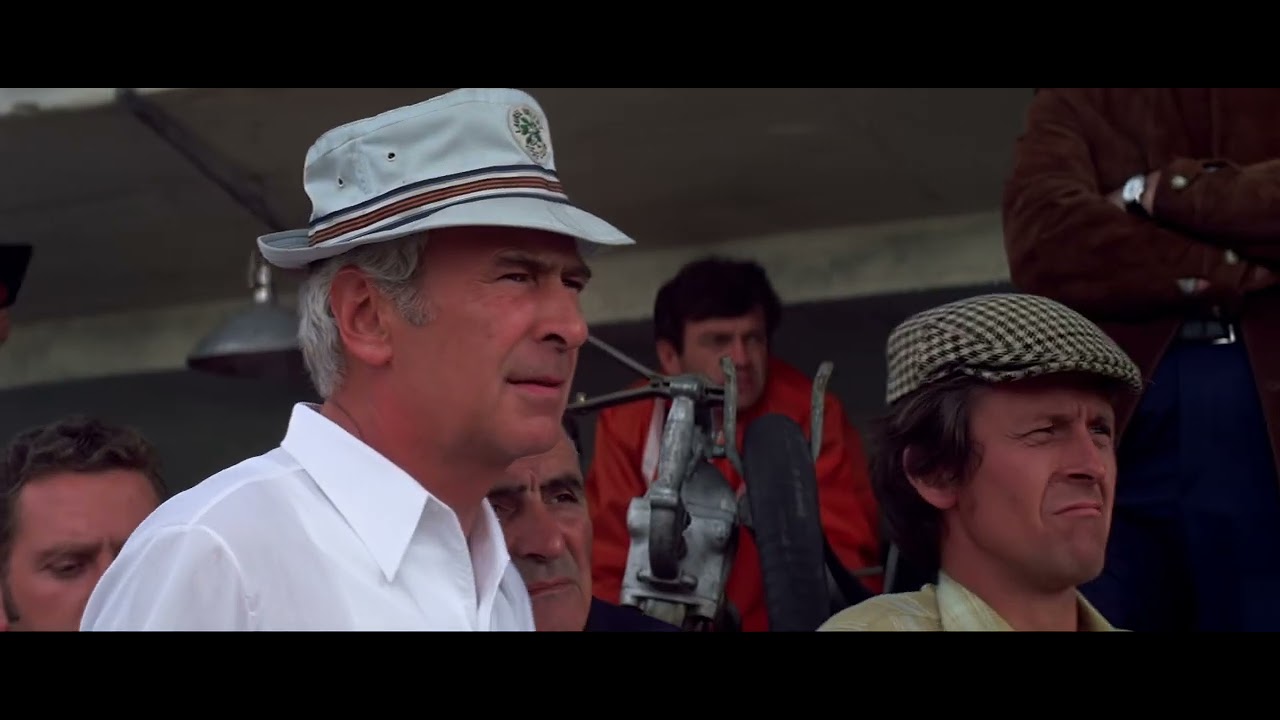
The handoff.
A sprint racer drives every lap of their race. An endurance racer hands it over to someone else and watches. The driver change is endurance racing's defining act, and the thing that turns a twelve-hour into a team sport.
In most types of racing, the race is yours from the green flag to the checkered. One driver qualifies the car, starts it, brings it home, and whatever happens in between is up to them and no one else. Endurance racing is the one discipline that takes the car out of your hands on purpose, in the middle of the fight, and gives it to someone else. Twice, three times, or many more. For long stretches of the race, the car with your name on the entry is being driven by someone else entirely. You are standing on the pit wall in a hot suit, watching someone else race the car with your name on it, and there is nothing to do but wait.
That moment, the handoff, is what the whole sport of endurance racing turns on.
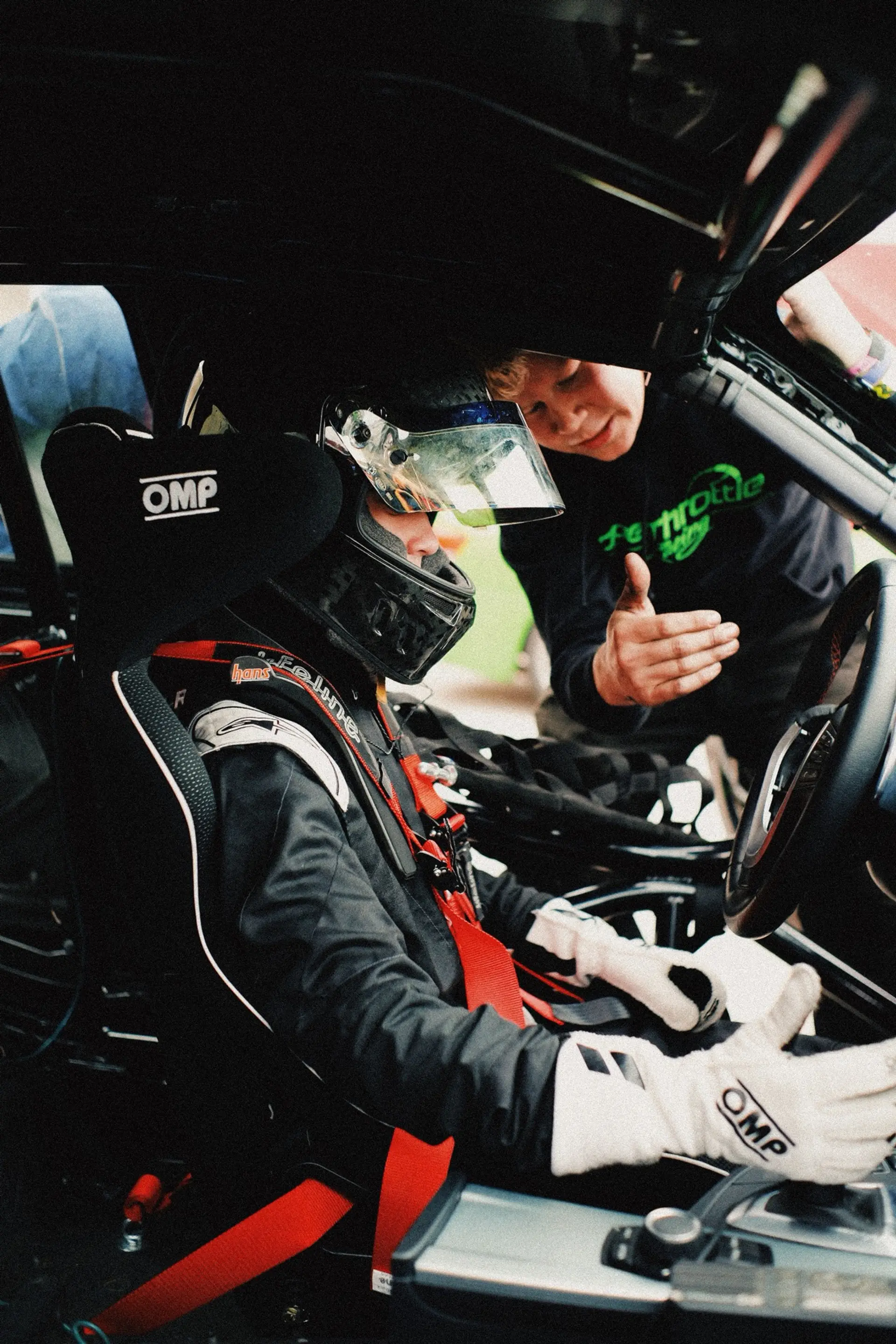
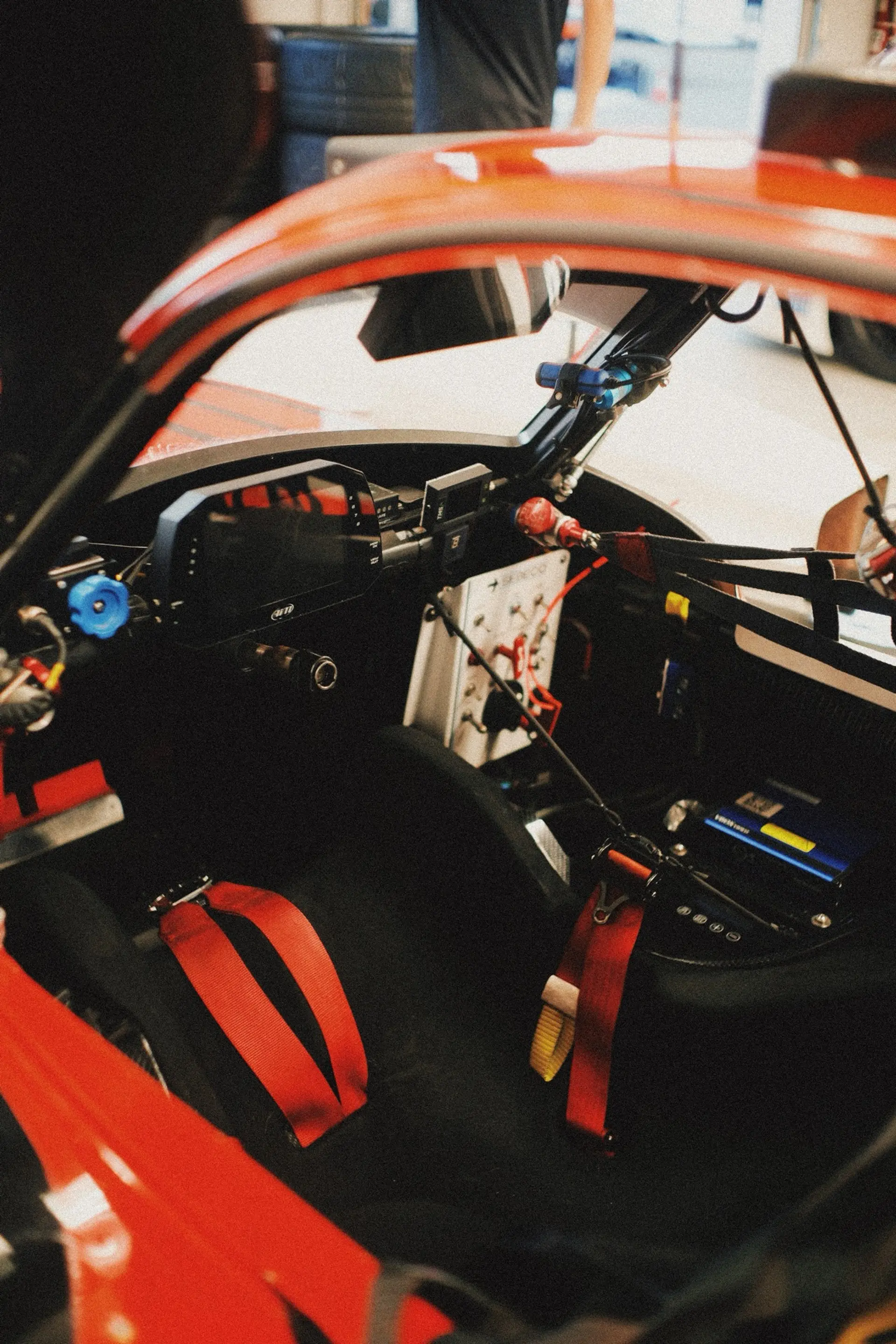
From the grandstand a stop often looks like nothing much. It’s a choreographed dance between the drivers and the crew that, from a distance, looks routine. Up close, inside the helmet, it’s one of the hardest things the team does all day. The car comes down pit lane just under the speed limit, stops on its marks, the clock already running. The exhausted driver has to unbelt themselves and flee, from inside a tightly packed seat and roll cage, in a helmet and a head restraint, after a long stint in ninety-degree heat. The next has to drop in, find belts set for another pair of shoulders, and connect them perfectly without being able to see anything, and be ready to go the instant the fuel and tires are done. Every moment the driver change takes longer than fuel or tires is a moment lost to the race.
Some of what decides that time is fixed long before the race. A pair of drivers built alike enough to share one seat insert, or to run a common seat, can hand the car over in seconds. A pair who each need their own foam shell pulled out and the next one wedged in lose real time at every stop. Watch it happen once and the cost is obvious:
From inside the helmet it is something else entirely. Ask Gino Manley, who shares the #85 AOA Racing car in ZR3, what he hates most about endurance racing, and he doesn’t name a corner, or a rival, or any day with bad luck. He names this.
When it goes well, it’s still chaos. The driver change is also where a hundred small things break, most of them the kind no other form of racing has to think about, because no other form asks a car to be opened, climbed into, sealed back up and lived in for twelve hours. In the heat, prototypes end up with doors that will no longer shut cleanly during a change, and some break outright and spend the rest of the race being taped shut after each driver climbs in, and cut open again for the next. The machinery is exotic and, by hour eight, disposable enough to manhandle.
Then comes the part a sprint driver never has to make peace with. Your car is only as fast as its slowest stint, and you do not drive all of them. An endurance race is split amongst many drivers. Take the Stratus #59, a recent overall winner: it was shared by three people who could hardly have less in common. Clay Magouyrk is the co-CEO of Oracle. Jason Alder is a seven-time national champion who also runs the team. Linus Lundqvist is the 2024 IndyCar Rookie of the Year. One builds software, one runs the operation, and one races in America’s top single-seater championship, and across twelve hours none of them did much more than a third of the driving. At the finish the win belonged to all three of them.
Deciding which driver drives at each point in the race is its own strategy, too. More drivers means shorter stints, fresher hands and smaller mistakes, but it also means more handoffs, and every handoff is a chance to lose time. Fewer drivers means the reverse: longer stints, deeper fatigue, fewer stops to get wrong. The Nimbus #77 of Ethan Barker and Gavin Vaughan ran the distance on two drivers where most of the field used three, which means each of them spends far longer in the seat, in a cockpit whose cooling system, like most of them on a hot day, has long since given up. They lead the ZP2 championship anyway. Two sets of hands doing the work of three is a result of its own.
When your stint ends you are not done with the race, you are only done affecting it for the time being. You hand the car over to the next driver, and then you wait. You watch the timing screen tick through a sector and you cannot make the car turn in any earlier, cannot lift for the slower car into the next corner, cannot feel the brakes going long that you will inherit in two hours. You have to trust that the person in your seat is doing what you would do, or better, and that when they hand it back the race you started is still alive.
So the trade endurance racing asks for is a unique one, and it’s what sets it apart from everything around it. You give up sole control of your own race. The result is not yours; it is the car’s, and the car is a small group of people who agreed in advance to share whatever the day hands them. A mistake in hour eleven by the driver you handed to in hour ten is your mistake now. A clean double stint in the dark is your result as much as theirs. Zenith keeps two championships for exactly this reason, one for the car and one for the drivers, because the thing that crosses the line and the people who got it there are not quite the same.
There’s a reason an endurance trophy carries more than one name. A win takes all of you, every stint, all race long. A loss takes one mistake, in one corner, from any driver in the lineup. That is what the handoff asks: you hand the car to someone who could end it for everyone, and then you watch.